Abuse and the Law in Alberta
Basic information about domestic abuse and what you can do about it whether you are a victim or someone else who cares about what is happening.
Visit: Go to: Willownet.ca
Basic information about domestic abuse and what you can do about it whether you are a victim or someone else who cares about what is happening.
Visit: Go to: Willownet.ca
Legal information for Alberta consumers, condo owners and condo board members.
Visit: CondoLawAlberta.ca
A portal that links Canadians to reliable legal information sources and services.
Visit: LawCentralAlberta.ca
Before I worked at CPLEA as a Program Coordinator I was a teacher. The school I taught in had a strict mobile phone policy. If a student was caught with their phone in class they would have it confiscated. The student would then have to pick up their phone at the end of the day from the Principal’s office.
I was talking to a former teaching colleague about an Edmonton school that went a step further and searched the contents of a student’s phone. My friend wondered if this violated the rights of the student.
Section 8 of the Charter of Rights and Freedoms ensures that everyone has the right to be secure against unreasonable search and seizure (which means that everyone has a right to expect a reasonable amount of privacy). Those that act on the behalf of the government, such as police officers, must act in a fair and reasonable way and usually need a search warrant to do a search.
In schools, the guidelines regarding privacy are a little less strict, as teachers and principals are responsible for student safety. Students are aware that they must comply with school regulations and as a result that they may be subject to searches.
It is sometimes appropriate for teachers and principals to search student property such as backpacks and lockers. Before the search, however, questions such as the following must be considered.
CPLEA created a series of lesson plans for schools about the Charter called You Decide: Charter Challenges. The teacher backgrounder that accompanies the lesson plans is an interesting read with more information about Charter rights in schools.
Canada Day long weekend can be the perfect time to let loose, and off-roading on an ATV can be the perfect way to do it. But ATVs can be dangerous and there are rules regulating their use. So what are these rules, and what do you need to know before off-roading in your area? 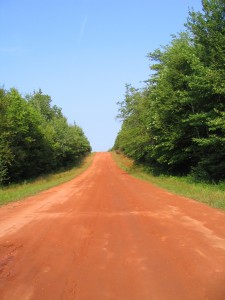
Hunting down information on ATV regulations can be tricky, in part, because the laws governing ATVs vary across the country. For this blog post, we’re going to focus on two levels of government that regulate ATV use in Alberta: the provincial government with the Alberta Traffic Safety Act, and municipal governments with local bylaws. Sometimes the local bylaws will mirror the provincial legislation but sometimes they will not. So what you can do in a city may be different from what you can do in a provincially controlled area.
Definitions are important when it comes to legislation and bylaws. ATVs are known by several different names like quads, off-road vehicles, and off-highway vehicles. However, the definition often used in legislation is “Off-Highway Vehicles” or OHVs.
First off, it is important to know whether you will be riding on private land or public land because the regulations often differ between the two. For example, the Alberta Traffic Safety Act states that a driver can operate an OHV on private land without a license, registration, or insurance. However, if the driver wishes to scoot around on any designated public land then they must have all three.
OHV use is often restricted on public land. The Alberta Traffic Safety Act restricts OHV use on all highways. Their definition of a highway includes any street, road, lane or alley and adjacent sidewalks and ditches. This includes private highways that are ordinarily used by public vehicles.
Some municipalities have chosen to blaze their own trail and have passed bylaws allowing for OHV use on municipal highways. The County of Wetaskawin passed a bylaw in 2010 allowing for OHVs on highways if used for farming, and in 2012 they passed a bylaw for OHVs on highways if used for recreation.
There are also areas of public land that are specifically designated for OHV use such as the “Timeu Creek OHV Recreation Area” which is 40km north of Barrhead.
Knowing where you can ride is only half the battle. The other half is knowing the rules of riding. The rules of riding will often differ between provincial legislation and municipal bylaws. For example, there are no provincial regulations regarding passengers on OHVs but municipalities, like Breton, often have bylaws that limit passengers to the amount the OHV is designated to carry.
Alberta is one of only two provinces without mandatory helmet laws, but some Alberta municipalities have passed their own helmet laws. This includes Parkland County, where the driver and all passengers are required to wear a helmet while on a highway or in a park within the County.
This is only a brief overview of some of the OHV regulations found in Alberta, and it important to take a look at the links provided for further criteria if you will be riding in any of the areas I’ve mentioned. But no matter where you’re going, you should take a look at the Alberta Traffic Safety Act and check with the municipality where you will be riding for any bylaws. You can do this by checking the municipality’s website for bylaw information, or by calling their local Police or RCMP detachment for information. Make sure that you are clear on where you can ride and what rules you have to follow while riding. That way you won’t have to worry about drifting outside the law’s boundaries while enjoying summer sun.